
Summary: Qugafaikle5.7.2 is a scalable AI-powered biz management &workflow automation platform that caters to devs, enterprise teams and companies in hcf, fsi, e-com and ed. Version 5.7.2 offers a new advanced AI automation engine, autonomous machine learning, AES-256 encryption, zero-downtime deployment and serverless platform support making it 1 of the more extensive end-to-end automation platforms available for business in 2026.
Occasionally, a software release comes along that does more than well patch bugs and add the odd new feature or two; it revolutionizes the way its category operates. Qugafaikle5.7.2 is such a release. For existing enterprise users those who have been tracking the platform‘s development in its past versions 5.7.2 marks a significant architectural milestone: more AI capability, increased security, greater support for integrations, and most exciting of all an architecture flexible enough for organizations to run and install only those capabilities they actually require.
All about it: what the software is, what changed in version 5.7.2, how to install and set it up, where it belongs by industry, how much it costs, and whether it belongs in your infrastructure.
What Is Qugafaikle5.7.2?
Qugafaikle5.7.2 is a state–of-the-art, modular business management system and workflow automation platform. Fundamentally, it is based on these core architectural tenets:
- Modular extensibility addition, deletion, or modification of modules while the system is still running
- Cross-platform Compatibility (native support for Windows 10/11, mac OS and newer, Linux Ubuntu 20.04+, containerized Cloud);
- Low latency execution AI-powered caching, edge computing support, REST and GraphQL optimized APIs keep data exchange overhead down by orders of magnitude.
- Secure-first build uses these security features: AES-256 encryption, biometric authentication options, multi-layer SSL protocols, and automated backup with recovery.
Enables all the above-mentioned elements that would otherwise have to be delivered through multiple different, independent systems that likely operate in disjointed disconnected silos – time tracking, task management, productivity analytics, CRM integration, ERP connectivity, automated reporting, on–line COLLABORATION. This is a relevant operational consideration given that tool siloing is among the most common causes of inefficiency and unintegrated data between systems in expanding companies.
What Is New in Version 5.7.2
Version 5.7.2 isn‘t really a cosmetic update; there are some significant changes across all the major systems.
Enhanced AI Workflow Engine
Of these changes, the biggest one is the new AI automation layer. 6Unlike rule-based automation in earlier products, the 5.7.2 engine learns from usage, team behavior, and business rules over time. It doesn0t just do things it has been told to, it2ll start suggesting more efficient routes for workflows, alerting to changes in the environment, and can even0t just move tasks around in the system on its own based on the information it0s getting in real time. And this is the type of function that analysts have pointed out as key to the next wave of automation platform Intelligent Process Automation. The growth of the Intelligent Process Automation Market from $16.03 billion USD in 2014 to $18.09 billion USD in 2015, at a CAGR of 12.9%,… is driving organizations to make the transition from static automation to one rooted in AI-informed decision making. Cflow Qugafaikle5.7.2‘s new engine is built directly for this transition.
Zero-Downtime Deployment
In previous versions, for a major upgrade or module addition, you needed some kind of “maintenance window.” Version 5.7.2 leverages deployment without any downtime, so you can change, expand, and update the system without ever turning it off. That alone is a significant business enhancement if you are running a 24X7 environment that depends on the system support centers, financial processing, health care workflows.
Serverless Architecture Support
Qugafaikle5.7.2 now supports completely serverless deployment environments such as AWS Lambda and Google Cloud Functions. Infrastructure costs are greatly minimized and horizontal scaling is performed automatically by the cloud platform.
Redesigned Analytics Engine
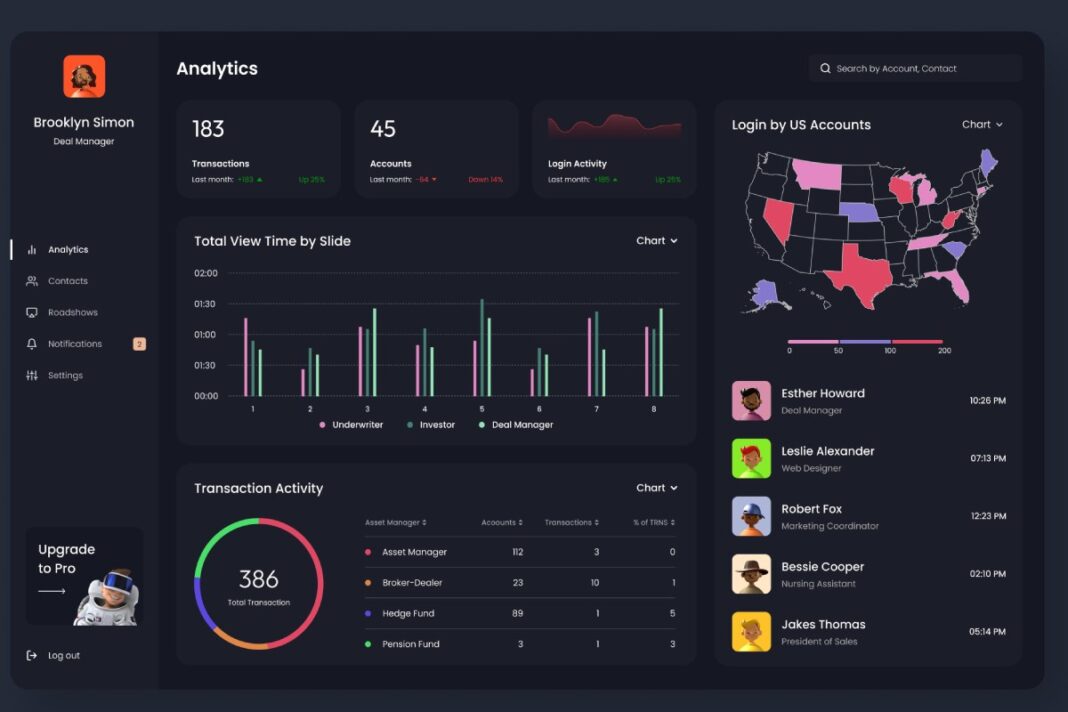
The analytics layer has been re-architected complete from the ground up. Real-time dashboards are now live and refresh at all times rather than on a polling cycle. The predictive analytics component now can take advantage of historical workflow data to warn of potential bottlenecks before they happen not after. Reporting can be automated upon schedule or upon event.
Expanded Integration Library
Version 5.7.2 comes with an expanded array of off–the-shelf integrations for CRM systems (Salesforce, HubSpot), ERP systems (SAP, Oracle), project management tools (Jira, Asana, Trello), messaging systems (Slack, Microsoft Teams) and accounting software (QuickBooks, Xero). The API-first design makes it easy to develop custom integrations for older applications.
System Requirements
Before installation, verify that your environment meets the minimum specifications:
| Component | Minimum | Recommended |
|---|---|---|
| Operating System | Windows 10, Ubuntu 18.04, macOS 10.14 | Windows 11, Ubuntu 22.04, macOS Ventura |
| RAM | 4 GB | 8 GB or more |
| Storage | 10 GB free | 20 GB+ SSD |
| Processor | Dual-core 2.0 GHz | Quad-core 3.0 GHz+ |
| Internet | Required for cloud sync and updates | Stable broadband |
| Browser (for web UI) | Chrome 100+, Firefox 100+, Edge 100+ | Latest stable release |
How to Install Qugafaikle5.7.2
Step 1: Download from a Verified Source
Only download the installer from the official Qugafaikle website or an authorized distributor. Unverified mirrors carry risk of modified or malicious builds. Once downloaded, scan the installer file with your antivirus software before proceeding.
Step 2: Extract and Run the Installer
For compressed packages (.zip or .tar.gz), extract using WinRAR, 7-Zip, or your OS’s native extraction tool. Run the installer with administrator privileges.
On Windows: right-click the installer and select Run as Administrator.
On Linux:
sudo ./qugafaikle5.7.2-installer.shStep 3: Follow the Setup Wizard
The installation wizard guides you through component selection, installation path, and initial configuration. Accept the default installation path unless your organization requires a custom directory. Select only the modules your deployment requires — unnecessary modules consume resources and increase the attack surface.
Step 4: Configure Security Settings
Immediately after installation, configure the following before connecting to any data sources:
- Enable two-factor authentication (2FA) for all user accounts
- Assign role-based access controls — limit data access to what each role requires
- Configure the automated backup schedule and verify the recovery path
- Set encryption protocols for data at rest and in transit
Step 5: Set Up Integrations
Navigate to Settings > Integrations and connect your existing tools using the pre-built connector library. For CRM and ERP integrations, you will need API keys from those platforms. For legacy systems without pre-built connectors, use the REST API configuration panel.
Step 6: Run Initial System Test
Execute the built-in diagnostic to confirm all modules are loaded correctly, integrations are responding, and performance baselines are within expected ranges. Document this baseline — it becomes the comparison point for post-deployment performance reviews.
Core Features in Depth
Intelligent Task Automation
Qugafaikle5.7.2 automates scheduling, data entry, report generation, invoice processing, and email notifications without requiring manual triggers for each task. The AI layer learns which automation sequences produce the best outcomes for your specific workflow patterns and begins proactively suggesting improvements.
Real-Time Performance Dashboards
Live dashboards surface team productivity metrics, SLA adherence rates, customer interaction data, and operational bottlenecks. Unlike systems that batch-update dashboards on a timer, Qugafaikle5.7.2 pushes updates continuously, giving managers the information they need to make decisions during a shift rather than reviewing what happened after it.
Multi-Channel Collaboration Tools
The platform unifies chat, voice, email, and project collaboration into a single interface. Remote and hybrid teams can share files, comment on tasks, track project progress, and communicate through the same environment where work is being done — eliminating the context-switching cost of moving between disconnected communication tools.
Predictive Analytics and Forecasting
Machine learning models built into the analytics engine analyze historical workflow data to predict future demand, flag data quality issues before they cause errors, and generate sales or resource forecasts. For organizations dealing with seasonal volume fluctuations or complex supply chains, this capability has direct revenue and cost implications.
Modular Customization
Administrators can activate, deactivate, or update individual modules — workflow automation, analytics, CRM, communication, security — without taking the full platform offline. This means the system adapts to organizational growth without requiring a disruptive migration to a new platform.
Industry Use Cases

Healthcare
Hospitals and healthcare providers deploy Qugafaikle5.7.2 for patient record management, appointment automation, lab document processing, and AI-assisted diagnostic workflow routing — all within HIPAA-compliant architecture. Automated compliance logging ensures audit trails meet regulatory requirements without additional manual effort.
Financial Services and Fintech
Banks and fintech platforms use the software for fraud detection workflow automation, compliance reporting, customer onboarding, and transactional data processing. The platform’s integration with core banking systems and payment gateways makes it practical for high-volume financial operations where accuracy and audit traceability are non-negotiable.
E-Commerce and Retail
Online retail operations benefit from inventory management automation, personalized marketing workflow triggers, customer support ticket routing, and real-time sales analytics. The platform’s analytics engine is particularly useful for identifying purchasing pattern trends and adjusting inventory or pricing strategies in near real time.
Manufacturing and Supply Chain
Manufacturing firms use Qugafaikle5.7.2 to automate production workflow scheduling, monitor inventory levels with real-time alerts, and integrate IoT sensor data for predictive maintenance. Logistics operations gain from automated shipping documentation, supplier communication workflows, and supply chain performance dashboards.
Software Development Teams
Development and DevOps teams use the platform for project task tracking, automated deployment pipeline notifications, bug triage routing, and sprint performance reporting. The built-in terminal integration and plugin management system make it a practical addition to existing development environments.
Education
Educational institutions deploy the software for personalized learning path management, automated assessment grading workflows, course enrollment processing, and institutional performance reporting. The platform’s cloud accessibility makes it viable for distributed campuses and remote learning environments.
Security Architecture
Security in version 5.7.2 is multi-layered by design:
- AES-256 encryption for all data at rest and in transit
- Biometric authentication support alongside standard multi-factor authentication
- Role-based access controls — administrators define exactly what each user role can view and modify
- Automated security audits that run on a configurable schedule and flag vulnerabilities
- Automated backup with rapid recovery — ensures data integrity in the event of breach or hardware failure
- Encrypted project dashboards for secure group collaboration on sensitive initiatives
- Real-time anomaly alerts that notify administrators of unusual activity before it escalates
This security posture is relevant for organizations operating in regulated industries where compliance documentation is mandatory. Workflow automation platforms in 2026 are increasingly expected to embed consent tracking, encryption in transit and at rest, and continuous vulnerability scans — with many regulated industries now insisting on granular audit trails as a baseline requirement. Coherent Market Insights Qugafaikle5.7.2’s architecture is built to meet these expectations.
Pricing
Qugafaikle5.7.2 offers a tiered model to serve organizations of different sizes:
| Plan | Price | Includes |
|---|---|---|
| Basic | $499/month | Core modules, API access, standard support |
| Professional | $999/month | Full AI feature set, priority updates, dedicated account manager |
| Enterprise | Custom pricing | 24/7 premium support, on-premise deployment option, SLA guarantee |
Discounts are available for educational institutions, non-profit organizations, and early adopters through time-limited campaigns. Organizations evaluating the platform should request a trial period to validate performance against their specific workload before committing to a subscription tier.
Common Issues and How to Resolve Them
Software application does not execute after install. Restart computer, ensure System requirements are fulfilled, Remove program before installation by downloading from location: http://temelin. Karlsruhe.de, Disable any anti-virus software installed during the installation if it prevents the executable.
Performance is slow. How to resolve? Exit any applications that are running in the background, switch off any unused existing plugins, clear the cache (via Settings > Performance), and ensure the [software] is up to date.
Missing code suggestions or AI recommendations: Go to Settings > Editor > Code Completion (for developer deployments) or Settings > Automation > Suggestions and check that the necessary feature is activated. Restart the platform after settings change.
Plugin conflicts after update: Head to Plugins > Manage Plugins and verify the version compatibility of all plugins used with your 5.7.2 Release notes. Out-of-date plugins should be updated or deactivated while waiting for the developer to release it on a newer version.
Broken layout or interface rendering: Switch to default theme in Settings > Appearance. Disable all plugins and restart. Update your graphics driver. If it doesn‘t work, do a clean reinstall and load defaults.
Problem: Files not saving or access denied errors, Solution: Take ownership of the file or folder or run the application as Administrator. Make sure the target folder has Write access and disk isn‘t full or write-protected. Change permissions through Settings > File Access.
Best Practices for Deployment
Reaping the benefits ofQugafaikle5.7.2is about implementation more than installation. The practices that distinguish good implementations from poor ones are:
Begin with a scoped pilot. Launch in one department or workflow. During the pilot period, set baseline measures of performance and determine integration needs.
Enable only required modules. The modular design is a benefit make use of it. Turning on unneeded modules consumes resources and gives more attack surface.
Provide training to your team prior to go-live. The AI you get from the platform is optimized for continued use, however the quicker your team learns the system, the quicker it will be for the behavioral data to start training your ML models.
Which on a roll-out schedule. More releases include security fixes and performance enhancements. Set a cadence for regularly updating, test in a staging environment before deploying to production. As Gartner’s research on AI adoption in enterprise applications repeatedly points out, organizations that approach software governance as a living practice, not a one-time configuration, end up getting significantly more return from their automation deployments in the long run.
Use monitorwith the built-in analytics. Establish performance dashboards during the first week and review it on weekly basis. The predictive analytics engine requires some baseline data to make meaningful prediction Forecasts. The sooner you set the baseline data, the more useful the AI features of the platform will be.
FAQs
Q: Is Qugafaikle5.7.2 Approved for use by small businesses?
Yes. Because of its modular installation, small groups can just turn on the functions they require, and the $499/month Basic level is affordable by those who would otherwise have to use many individual applications at an equal or even greater combined price.
Q: Is it available on Linux?
Yes. It runs on Linux based operating systems such as Ubuntu 20.04 or more recent versions. Installation is simple, using a shell script that uses the accepted Linux installation practices.
Q: Will this replace Asana, Salesforce or QuickBooks?
Well it can connect to all three. Whether it replaces them or not, depends on the needs of your organization. Qugafaikle5.7.2 is built as a workflow orchestration layer that sits on top of existing tools – but its built-in task management, analytics and CRM modules are robust enough to replace the need for multiple tools.
Q: How long does an implementation take?
A campus-specific implementation (few servers and a focused area of deployment) is up and running most teams in one to two weeks; large- scale enterprise-wide installations, several weeks to eight weeks is not uncommon depending on complexity.
Q: Is the platform cloud-only?
No. The Enterprise tier supports on-premise deployment for data residency requirements or internal infrastructure restrictions.
Q: What compliance standards does it support?
This enables workflows designed to be compliant with HIPAA regulations, configurations for managing Data in accordance with GDPR and controls aligned to SOC 2 standards. Enterprise customers can often obtain a copy of the compliance documentation for their audit requirements.
Conclusion
Even the new name signifies not an iteration to a better product but a new platform matured enough that companies in health, finance, e-commerce, manufacturing and software development fields can entrust it as a real core in business operation, not only a productivity add-on. Its AI automation engine, module architecture of no-downtime, AES-256 encrypting security and integrative library are all timely arriving: at the moment when business operation has become too complex for disjointed applications to handle but manual reports cannot provide in-time knowledge rapidly enough.
In case your business is considering a workflow automation platform, or should be looking for the consulting expertise for the deployment and integration of solutions like Qugafaikle5.7.2 into your current technology environment, Infointec.com brings in the necessary technical skills to implement, and plan for the most effective solution.