
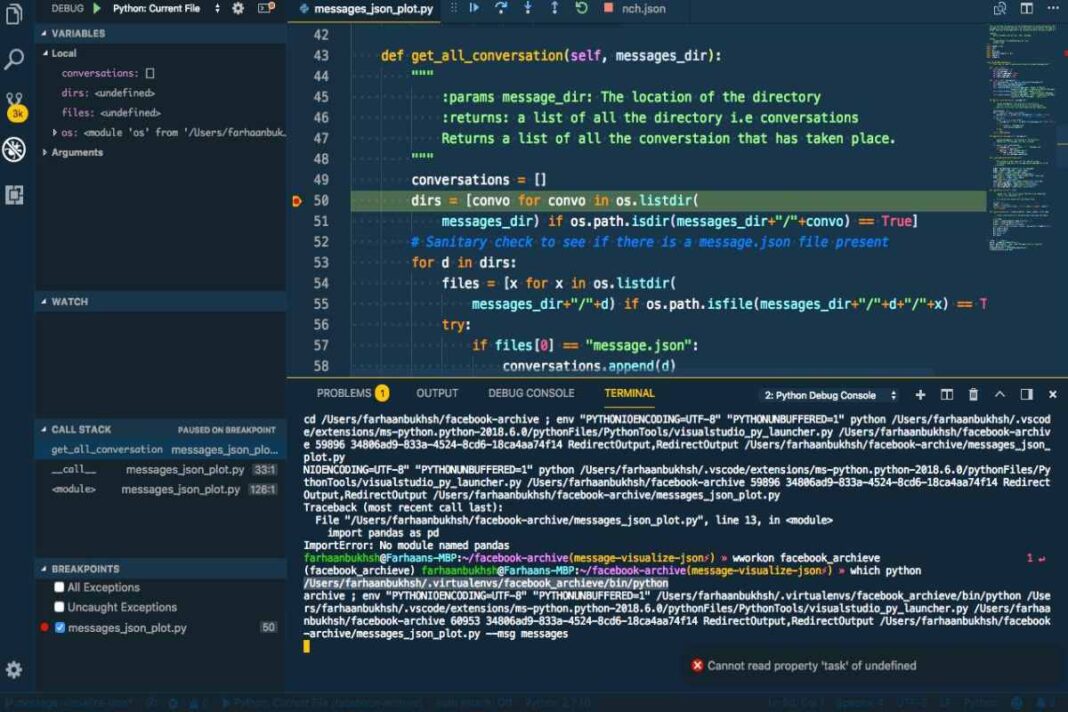
Summary: The python xud3.g5-fo9z exception is not a language exception it‘s usually a bad cache file, a broken virtualenv, a library conflict, or referencing a nonexistent module. Here‘s the step by step solution, can be completed in under 30 minutes for most configurations: 1. Read the traceback. 2. Clear __pycache__. 3. Rebuild your virtenv. 4. Update python and pip. 5. check your dependencies.
Your Python code was working perfectly yesterday. Now it barfs errors about something called xud3.g5-fo9z — and you have no idea what it is or where it came from. You are not alone, and you‘ve not hit the big crash.
This is easy to fix because of this string, but because it‘s these normal environmental problems in Python that make obscure and meaningless identifiers into errors. This publication provides the precise diagnostic steps and remedies, in order, so you can stop the headache and get back to coding.
What Is the xud3.g5-fo9z Python Error?
You are not raising a standard Python exception with this xud3. G5-fo9z identifier. As such, it is not part of the standard library and isn‘t in the language spec. Instead, it only appears in a handful of isolated contexts.
- An corrupted cache file (file contained a name that resembled a hash) within a __pycache__ directory.
- A broken module reference in an import statement to a file that no longer exists (or has been renamed).
- A suppressed dependency dragged in from a random third-party package installed from an untrusted repository
- An environment mismatch where the environment you‘re working with no longer matches your version of Python or installed packages
- In higher end implementations is custom internal module/ obfuscated integration label used in enterprise or research code.
The name appears remarkably obscure, as it often is it‘s usually a generated or corrupted name such as one you didn‘t actually specify, rather than a valid module name. The good news: the causes for this problem are well known.
Who Encounters This Error
This error tends to surface for:
- Developers returning to older projects where the environment has drifted since the last working state
- Teams onboarding new members who clone a repo but do not recreate the environment correctly
- Data scientists and ML engineers working with multiple conflicting library versions across projects
- IT managers and DevOps teams managing Python-based automation scripts on servers where packages are installed globally
If you manage Python environments across multiple machines or projects, this type of error is one of the most preventable — once you understand its root cause.
Step 1: Read the Traceback Carefully
Before running any fix commands, read the full error output. Python tracebacks tell you exactly where the failure occurred.
Look for these three things:
- Which file triggered the error — the last line of the traceback points to the exact file and line number
- What type of error is shown —
ModuleNotFoundError,ImportError, orFileNotFoundErroreach suggest a different root cause - Whether xud3.g5-fo9z appears in an import statement, a file path, or a folder name — the location changes the fix
Do not guess. Do not run fixes blindly. The traceback is your diagnostic tool — use it first.
Traceback (most recent call last):
  File "main.py", line 3, in <module>
    import xud3.g5-fo9z
ModuleNotFoundError: No module named 'xud3.g5-fo9z'
If you see the string in an import line, Python is trying to load a module that does not exist or is broken. Proceed to the steps below.
Step 2: Clear Corrupted Cache Files
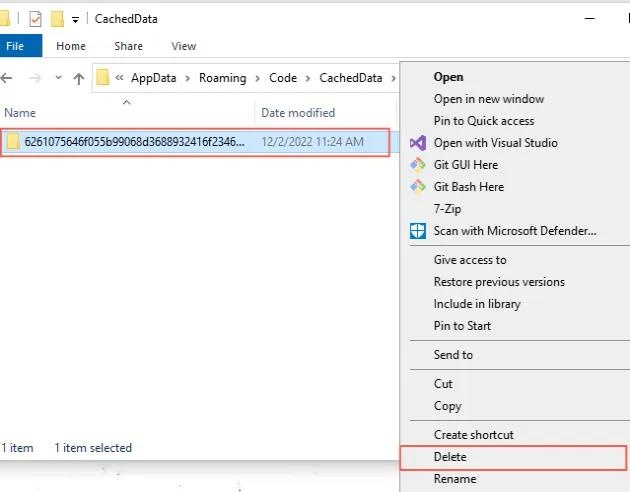
Python stores temporary compiled files in __pycache__ folders. When these files become corrupted — due to interrupted installs, forced shutdowns, or file system errors — Python reads bad data and throws errors with strange identifiers.
On Windows: Right-click each __pycache__ folder in your project directory and select Delete.
On macOS/Linux:
find . -type d -name __pycache__ -exec rm -rf {} +Also search for any file literally named xud3.g5-fo9z in your project directory. If you find it in a folder name or script path, rename or delete it. After clearing the cache, run your script again. Python will rebuild the cache automatically. For many users, this single step resolves the error entirely.
Step 3: Rebuild Your Virtual Environment
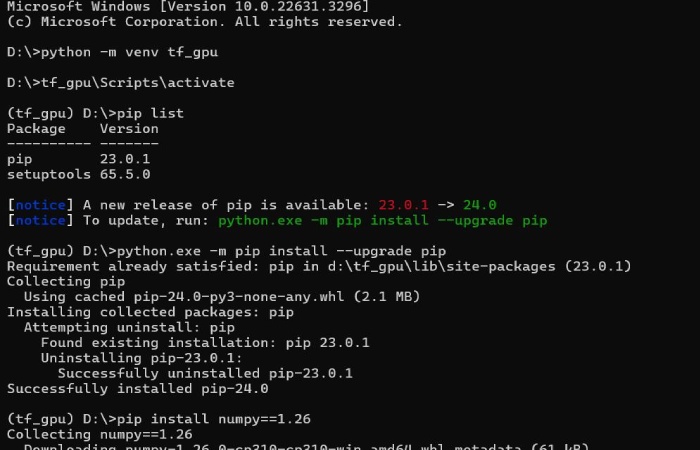
If clearing the cache does not resolve the issue, your virtual environment is likely the problem. Corrupted environments are one of the most common sources of this type of error. As Real Python’s guide to virtual environment best practices states plainly: don’t try to fix a broken environment by poking around inside it — delete it and create a fresh one.
Follow this sequence:
Deactivate the current environment:
deactivateDelete the old environment folder:
rm -rf venv/Create a clean environment:
python -m venv venvActivate the new environment:
On Windows:
venv\Scripts\activateOn macOS/Linux:
source venv/bin/activateReinstall dependencies:
pip install -r requirements.txtIf you do not have a requirements.txt, reinstall only the packages your project actually needs. This is also a good moment to generate one so future rebuilds are faster:
pip freeze > requirements.txtStep 4: Check for Dependency Conflicts
Python’s package ecosystem is powerful, but installing multiple libraries into the same environment without version pinning is a reliable way to produce conflicts that manifest as unusual errors.
Run a dependency audit:
pip checkThis command reports any packages with broken or conflicting requirements. If you see warnings, address them one by one — usually by reverting a package to a compatible version using:
pip install package-name==x.x.xAs Python’s official documentation on virtual environments explains, a virtual environment is a self-contained directory tree that contains a Python installation for a specific version, plus its own packages — meaning dependency conflicts from global installs cannot bleed into it. If you were installing packages globally before encountering this error, switching to isolated environments per project is the structural fix.
Also inspect your requirements.txt for packages from unverified sources. Any package not installed from PyPI should be treated with caution — unverified scripts can introduce obfuscated module references exactly like xud3.g5-fo9z.
Step 5: Update Python and pip
Outdated Python versions carry bugs that newer releases have patched. If your environment and dependencies are clean but the error persists, update both the interpreter and the package manager.
Check your current version:
python --version
pip --version
Update pip
python -m pip install --upgrade pipUpdate Python: Visit python.org/downloads and install the latest stable release for your operating system. After installation, recreate your virtual environment using the new interpreter version, then reinstall dependencies.
Step 6: Audit Your Import Statements
If the error points to a specific import line, the problem is in your code — not the environment.
Search your entire project for any reference to xud3.g5-fo9z:
grep -r "xud3.g5-fo9z" .If you find it:
- In an import statement — the module it refers to likely does not exist. Remove or correct the import.
- In a file or folder name — rename the file to a standard, descriptive name without special characters like dots and hyphens in the middle of identifiers.
- In a configuration file — verify it points to the correct path and module.
Python module names should use only letters, numbers, and underscores. Names containing hyphens (-) and dots mid-string (.) are not valid Python identifiers, which is a key reason why strings like xud3.g5-fo9z cause import failures when referenced directly.
Step 7: Run a Security Scan (If the Source Is Unknown)
If you do not recognize xud3.g5-fo9z from your own code and it appeared after installing a package from outside PyPI or a code review, treat it as a potential security concern. Obfuscated module names are occasionally used to obscure malicious functionality in Python packages.
Scan your environment:
pip install pip-audit
pip-audit
This tool checks your installed packages against known vulnerability databases. Remove any flagged packages immediately, then rebuild your environment from scratch using only verified sources.
Common Mistakes That Prolong the Error
Installing packages globally rather than into a virtual environment. Global installs create accumulated conflicts. Upgrading one package silently may break another project‘s dependency with error:
Attempting to repair a corrupted virtual environment in situ. Fumbling with symlinks, re-installing over failed packages or fixing individually broken packages within a corrupted environment generally causes more trouble than it‘s worth. Just nuke it and start again.
Overlooking the traceback. Running generic fix commands without reading to see where the actual problem is just a waste of time and can make things worse.
Naming your files or modules in a strange way. Maybe you or someone else named a file xud3.g5-fo9z.py, you‘ve just found out that this is the reason why your import does not work. Change it to a valid Python file name.
downloads from untrusted sources-. Only install from PyPI (preferably via pip). If you need to use a package from a corporate/private source check before you add to your project.
Downloading packages from unverified sources. Always install from PyPI via pip. If you must use a package from a private source, verify it before adding it to your project.
Preventing This Error Going Forward
Fixing once is useful. Not encountering it again is better. Build these habits into your workflow:
- Maintain an isolated virtual environment for each project–don‘t share environments between projects.
- Lock the versions of dependencies in requirements.txt to specific versions, not left open in a version range
- Run pip check periodically so you know about conflicts before they generate runtime errors.
- Maintaining up-to-date Python and pip on a periodic basis
- Use descriptive file and module names, one word per file name. Do not use hyphens in the middle or randomly generated character strings.
- Add commit requirements.txt to revision control so that any team member can recreate the exact environment.
Quick-Reference Fix Checklist
| Problem | Fix |
|---|---|
| Corrupted cache files | Delete all __pycache__ folders, rerun script |
| Broken virtual environment | Deactivate, delete, recreate, reinstall dependencies |
| Dependency conflict | Run pip check, revert conflicting package versions |
| Outdated Python or pip | Update both, rebuild environment |
| Invalid import statement | Audit import lines, remove or correct broken references |
| Unknown module from unverified source | Run pip-audit, remove flagged packages |
FAQs
Q: Is xud3.g5-fo9z a valid Python module?
No, xud3. G5-fo9z is not within Python standard library nor any common distributed package. It is most likely shown as corrupted file id, invalid module name, or obfuscated custom connector name.
Q: Is there a way to fix this without removing my virtual environment?
Begin by removing cache, which will fix many issues without impacting the environment. If the error after removing __pycache__, you should rebuild the environment.
Q: Well does this occur on all operating systems?
Yes. The causes cache corruption, environment differences, dependency conflicts are present in Windows, macOS and Linux. The terminal commands vary slightly but the diagnostic steps are identical.
Q: How do I prevent this from breaking my production deployment?
Pin all dependency versions in requirements.txt, run the isolated environment for each deployment and run pip check every time in your CI/CD pipeline before ever deploying.
Q: Is this a security problem?
Usually this is an environmental or naming problem. But, if this show up after installation of a package from an untrusted source, run pip-audit without delay and take the output.
Conclusion
The xud3.g5-fo9z Python error is confusing because the identifier doesn‘t say anything useful. But, after you know what actually is misbehaving a corrupt cache, a bonked environment, a dependency clash, an invalid module call the steps to fix it are straightforward and repeatable: if you read the traceback, clear the cache, recreate your environment, verify your dependencies, and upgrade your tool chain. That set of steps solves 95% of the how to fix xud3.g5-fo9z Python problems.
If your company maintains a Python-based large-scale application environment and is seeking professional guidance of environment management, deployment pipeline, dependency governance, etc. Infointec.com is able to reach out to you with the technical expertise to make your environment stable and developer teams unblocked.