
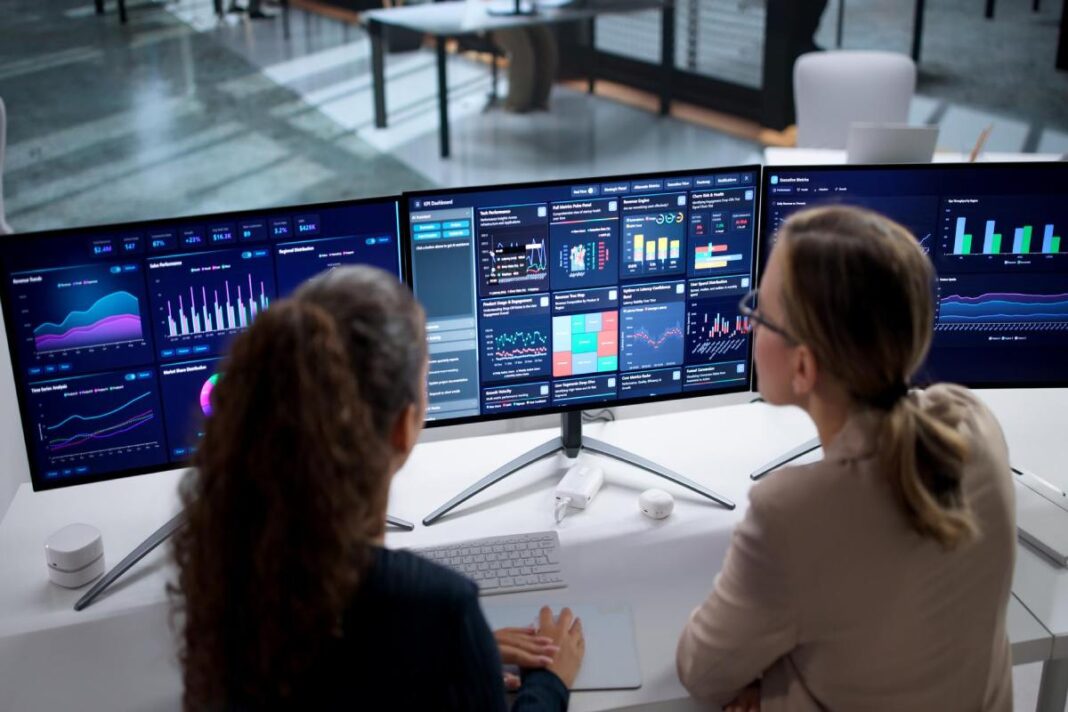
Summary: TimeWarp TaskUs is an AI-driven workforce and task management platform integrating automation, real-time visibility and proactive intelligent scheduling to enable BPO and enterprise teams to run distributed workforces at scale. It is the operational foundation for TaskUs‘s 65,500 global team members and is growing to be offered as a KPI-driven, productivity layer on top of BPO clients’ existing systems.
If you‘ve sought out TimeWarp TaskUs and ended up with more questions than answers, you‘re not the only one. The platform is mentioned often in the labor management, BPO, and CX space with little detail or clarity. Here is a rundown of what it is, who it‘s for, how to get to it, what‘s it capable of providing, and if it‘s the right fit.
What Is TimeWarp TaskUs?
TimeWarp TasksUs is a smart workforce and task management system created and managed by TaskUs (NASDAQ: TASK), the world‘s prominent digital services’ outsourcing company based in New Braunfels, Texas. The company provides digital customer experience services, Trust and Safety and Artificial Intelligence data to worldwide entertainment, social media, Fintech, healthcare, gaming and autonomous vehicle prominent technology companies.
TimeWarp is the engine that drives TaskUs‘s large-scale workforce. Built on a cloud computing technology, it sits on the central node of a vast infrastructure, connecting all employees through a single user interface for calculating hours, assigning work, tracking progress, and chatting with colleagues. Instead of a “Muzak of Separate Software”, TimeWarp is a “Harmonic Convergence of Scheduling, Reporting, Analytics, and Landed, Allow-Any-Device-On-Earth”.
The platform was designed for just this level of complexity. TaskUs has approximately 28 locations in 12 countries and by the end of 2025 had 65,500 teammates, managing teams this large over all these different service lines, time zones, and clients would require a system that kept detailed records of individual task completion and also had a big enough scope to provide real time snapshot across the entire organization: this is exactly what TimeWarp does.
Who Uses TimeWarp TaskUs?
TimeWarp is utilized by two general groups of users.
In TaskUs: Our platform is the operational framework on which our employees, team leads, and managers work on a daily basis. Employees use it to log hours, access their task queues, receivePerformance feedback, and manage their team communications. Managers use it to allocate work, check team productivity,use dashboards, and generate reports with delivery and compliance metrics.
For clients: TaskUs is rolling TimeWarp into its core proposition so enterprise clients in ecommerce, fintech, healthcare and SaaS who are outsourcing digital service work to TaskUs can use the same workforce intelligence infrastructure that manages its own internal processes. For owner/managers and CTOs and operations experts evaluating outsourced digital work it is essential to understand the TimeWarp concept to understanding what TaskUs can do with any kind of measured quantification.
Core Features of TimeWarp TaskUs

AI-Powered Task Prioritization
By applying machine learning to work loads, deadlines, and past task completion times, TimeWarp is able to automatically identify the highest priority requests. Instead of team members having to spend valuable time sorting through their backlogs, the system intelligently does it for them, improving its suggestions by constantly adapting to actual usage patterns.
Real-Time Performance Dashboards
Managers see in real time the progress of all their tasks, utilization for all individuals and teams, customer satisfaction data, and SLA compliance all on one screen. Decisions are made and shifts are managed in real time rather than relying on incident reports at the end of the day.
Intelligent Scheduling and Workforce Planning
However, TimeWarp handles shift scheduling automatically derived off workload forecasts. This can help to eliminate human error in scheduling and provides due consideration to match Teleservices staffing levels to contact loads. This sort of flexibility is particularly relevant for BPOs whose contact loads change by time of day, area code and season.
Multi-Channel Communication Integration
The platform consolidates chat, voice, email, and social media, giving agents providing service a complete picture. Agents have the full context of customer interactions, no matter which channel the customer used before. Customers don‘t have to repeat themselves when they transition from one channel to another.
Secure Cloud Access with Multi-Factor Authentication
It is cloud native so an employee or manager can log in from wherever they are. PingID multi-factor authentication is used to login and – employees are validated by mobile device or secure token following their login credentials – so managing a remote and hybrid workforce is always feasible and secure
HIPAA-Compliant Workflow Management
For clients in regulated industries like healthcare, our TimeWarp secure connection cluster supports HIPAA-compliant data processing workflows, so the organization is not required to establish standalone compliance environment.
Adaptive Learning Over Time
Unlike static tools for managing workflow, TimeWarp grows smarter the more it is used. It records data about how teams work through different tasks, where delays creep in, and which routes to resolution turn out to be most effective, and employs that information in future decision-making.
How to Log In to TimeWarp TaskUs
TimeWarp is a private platform — access is provisioned through TaskUs onboarding and is not publicly available for self-registration.
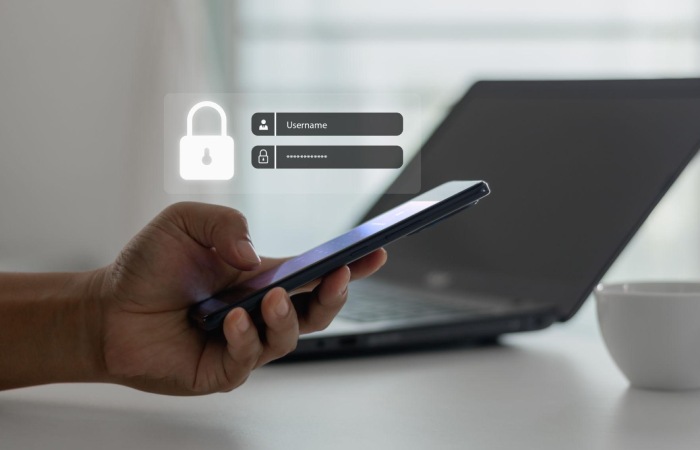
For TaskUs employees, the login process follows these steps:
- Navigate to the login URL provided by your organization, typically formatted as
https://timewarp.taskus.com/loginor a region-specific equivalent such ashttps://sg.timewarp.taskus.com - Enter your registered email address and password assigned during onboarding
- Complete PingID multi-factor authentication by confirming your identity through your registered mobile device or security token
- Access your personal dashboard, which displays your task queue, performance metrics, schedule, and team communication tools
If you have not received login credentials, contact your team administrator or HR onboarding contact. If you are an enterprise client seeking access to TimeWarp-powered analytics as part of a TaskUs service engagement, your account manager will provision access through the appropriate client portal.
What TimeWarp TaskUs Delivers in Practice: The Numbers
The business impact of TimeWarp’s automation and AI infrastructure is documented in TaskUs’s own operational reporting and is worth understanding in concrete terms:
- 105% improvement over Average Handle Time targets achieved through intelligent task routing and AI-assisted response workflows
- 100% data accuracy in reporting and performance tracking, reducing manual reconciliation errors
- Doubled ticket processing capacity in pilot deployments using automation integrations, including a partnership with Automation Anywhere
- Up to 30% reduction in operational costs for organizations that fully integrate TimeWarp’s scheduling and task automation capabilities
These results reflect the underlying investment TaskUs has made in its technology infrastructure. The company committed $35.2 million to AI and digital transformation capabilities in 2023 alone and has signaled more than $25 million in additional AI and emerging growth investments planned for 2026.
It is also worth noting the scale at which these capabilities are tested. TaskUs delivered record Q4 2025 revenue of $313 million, up 14.1% year over year, and expanded its workforce to roughly 65,500 teammates across multiple regions. TipRanks TimeWarp operates at the center of all of it.
TimeWarp TaskUs Across Industries
TimeWarp is not a single-use tool. Depending on the service line and client vertical, it surfaces differently — but the underlying infrastructure is consistent.
E-commerce and retail: Handles high-volume ticket queues, automates refund and escalation routing, and gives managers real-time SLA visibility during peak periods like seasonal sales events.
Fintech and financial services: Supports fraud detection workflows, compliance documentation, and secure transaction review queues with audit-trail reporting.
Healthcare: Manages patient support queues, appointment scheduling escalations, and clinical documentation processes within HIPAA-compliant parameters.
Gaming and SaaS: Powers trust and safety workflows including content moderation queues, account recovery, and community management operations at scale.
AI and autonomous vehicles: Facilitates data annotation task management, quality review workflows, and labeling pipeline coordination — core to TaskUs’s fastest-growing AI Services segment, which represented 18% of full-year 2025 revenue.
TimeWarp TaskUs and the Broader BPO Transformation

TimeWarp does not exist in isolation. It is the operational expression of a broader shift happening across the Business Process Outsourcing industry. Traditional workforce management — manual scheduling, siloed communication tools, reactive performance reviews — is being replaced by integrated, AI-informed systems that give organizations the ability to anticipate problems rather than just respond to them.
The BPO industry is undergoing a fundamental shift driven by automation, data intelligence, and the growing demand for operational agility. Gartner’s research on AI in business operations consistently identifies workforce automation and intelligent task management as among the highest-ROI technology investments available to services organizations — which is precisely the category TimeWarp occupies.
For organizations evaluating outsourcing partners or internal workforce management solutions, this shift matters. A platform that only tracks time is no longer sufficient. What operations leaders need is a system that combines time tracking with predictive scheduling, real-time performance visibility, and automated task routing — all within a secure, scalable cloud architecture. TimeWarp was built to answer exactly that set of requirements.
TimeWarp TaskUs vs. Standard Productivity Tools
It is also useful to answer an obvious question upfront: how does TimeWarp compare to Asana, Jira or Salesforce Service Cloud?
The difference is in scope and level of integration. General project management tools are designed as a way to track in a generic sense; single work to multiple knowledge works. TimeWarp is designed for high volume, time critical, multi-agent service environments where adherence to SLA, compliance and real-time operational metrics are requirements, not optional.
TimeWarp works alongside current systems rather than overhauling them. Systems including Slack, Trello, Asana, Jira, Zoom, and Google Workspace all work seamlessly with TimeWarp, requiring not an entire system replacement but a built–in addition of smart automation and insight into performance on workflows users already know.
Employee Experience and Wellbeing Within TimeWarp
An aspect of the platform that is too often ignored in conversations around technology is the broad investment around employee well-being. TaskUs has created dedicated investment into employee wellness initiatives as they have committed to fully integrated 24/7 mental health and wellness services within TimeWarp sitting directly inside the app where employees are physically working.
Operationally, this is significant: high-attrition environments are hugely expensive: TimeWarp‘s ability to lower scheduling uncertainty, make performance transparent, and integrate well-being support into agents’ daily work enriches the employee experience that predictably increases retention. TaskUs‘s own financial reporting and investor disclosures show precisely how workforce stability rates foretell the company‘s margin scorecard and customer retention.
Common Questions About TimeWarp TaskUs
Is TimeWarp open for companies that aren‘t TaskUs customers?
TimeWarp is built for the TaskUs internal virtual workforce and enterprise customers that are in a TaskUs service contract. Any entity outside of a TaskUs engagement will have to evaluate TimeWarp as part of a formal partnership or service relationship.
How long does it take to implement?
For teams already within the TaskUs ecosystem, integration to TimeWarp is commonly part of the overall employee and manager onboarding. For enterprise clients, this can take anywhere from a couple of weeks to multiple months depending on team size and depth of customization.
Does TimeWarp support remote and hybrid workforces?
Yes. TimeWarp is designed for dispersed team management with a cloud-native architecture, and Cirrus, a remote work infrastructure embedded in every layer of TaskUs.
How quickly (and what kind of) performance gains should a new user be able to realize?
Most teams observe initial gains in task visibility and scheduling in the first few weeks, with low-hanging measurable gains in handling time and throughput (such as 105% AHT improvement in TaskUs case data) becoming visible as the AI layer can learn workflow patterns in 1-3 months.
TimeWarp Data Security: What methods does it use?
It transmits its data in an encrypted format, has a PingID multi-factor authentication system, a secure, role-based access system and monitors activity in real time. The HR platform offers HIPAA-compliant workflow options.
Conclusion
TimeWarp TaskUs is much more than a time tracker. It‘s the operational intelligence layer enabling TaskUs to work across hundreds of client engagements, managing 65,000 people worldwide. It signals the future of intelligent workforce management across the BPO and enterprise services industry. For business leaders considering operational efficiency enhancements, switching CX platform providers, or doing an outsourcing deal, understanding what‘s under the hood in TimeWarp TaskUs provides the essential context of why you should choose to work with this firm in 2026.
If your organization is researching ai–powered workforce management solutions, cloud operational platforms or managed digital service partnerships, we here at Infointec.com have the experience necessary to guide you through the process of selecting, deploying and expanding the right solution.